
Something's not working? We'll find it
Dead circuits, tripping safety switches, lights that won't, power points that don't. We trace the actual fault instead of guessing and charging you for parts.
Book a call-out
Tell us what's happening and where. Urgent faults get a call back first.
No call centre. Goes straight to us.
Burning smell, scorch marks or sparks?
Switch off at the board if you safely can, then ring us. Don't wait to see if it settles down.
What we get called out for
Most of it lands in one of these. If yours isn't here, ring anyway — it's probably still us.
Power's out, partly or fully
A tripped circuit, a failed RCD, a neutral gone open, or a supply problem that's actually the distributor's. We work out which before touching anything.
Safety switch keeps tripping
Nuisance tripping is a symptom, not a fault in itself. We isolate circuit by circuit until the leaking appliance or cable shows itself.
Lights and power points
Dead outlets, flickering downlights, switches that do nothing, fans that hum. Usually a connection, sometimes a cable, occasionally a bigger story.
Smoke alarms
Chirping at 2am, past their ten-year date, or not interconnected the way current standards want. Replaced and tested in one visit.
Rentals and property management
Compliance work and repairs across a portfolio, with paperwork that satisfies the agent and the owner. Two-yearly electrical safety checks apply to every Victorian rental.
New circuits and renovations
Extra outlets, dedicated circuits for the oven or aircon, lighting changes, and rough-in work on renos. More on residential electrical work.
You'll know the number first
Fault finding is the one job where nobody can quote a fixed total blind — the cause is the thing you're paying us to find. So we do it in two parts, and you decide at the gate.
- Attendance and diagnosis — a set fee, told to you before we book
- Then a fixed price to fix it — quoted once we know what it is
- You approve before we continue — no work happens on assumption
- No charge for showing up twice if we have to come back for a part
- Certificate of Electrical Safety on completion, every time
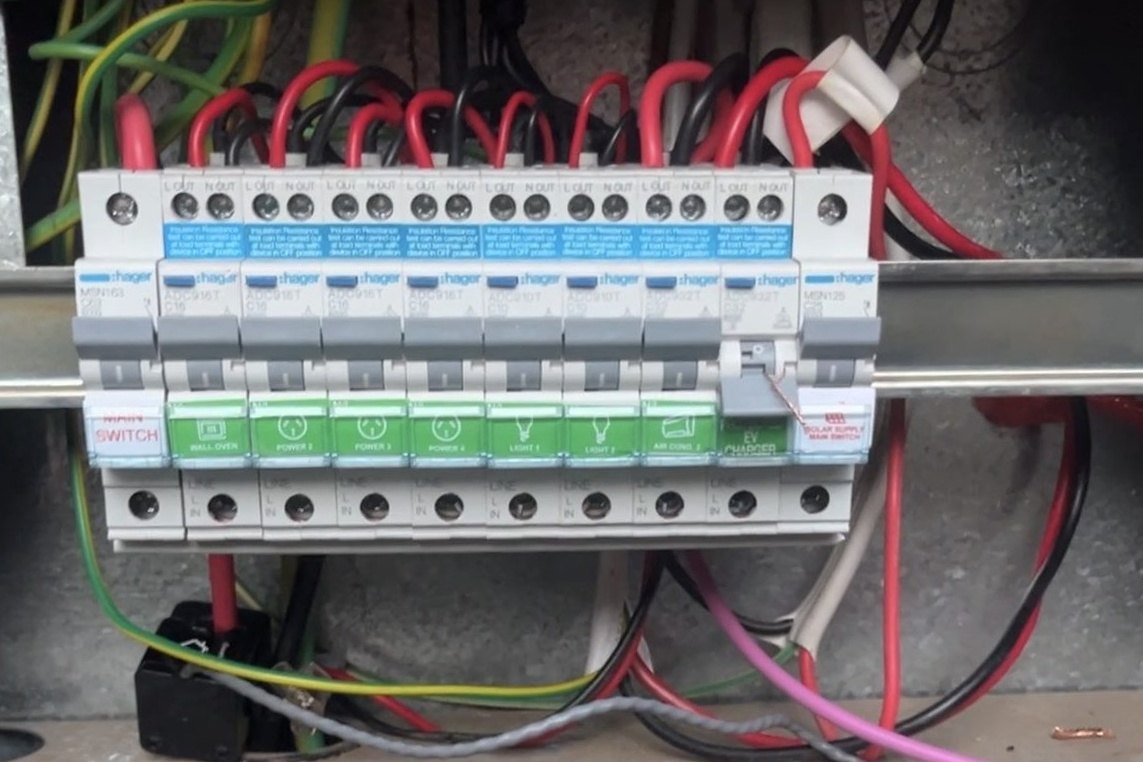
Switchboard upgrades
The board is the one part of a house that protects everything else. If yours still has ceramic fuses, it was designed for a household that didn't own a dishwasher.
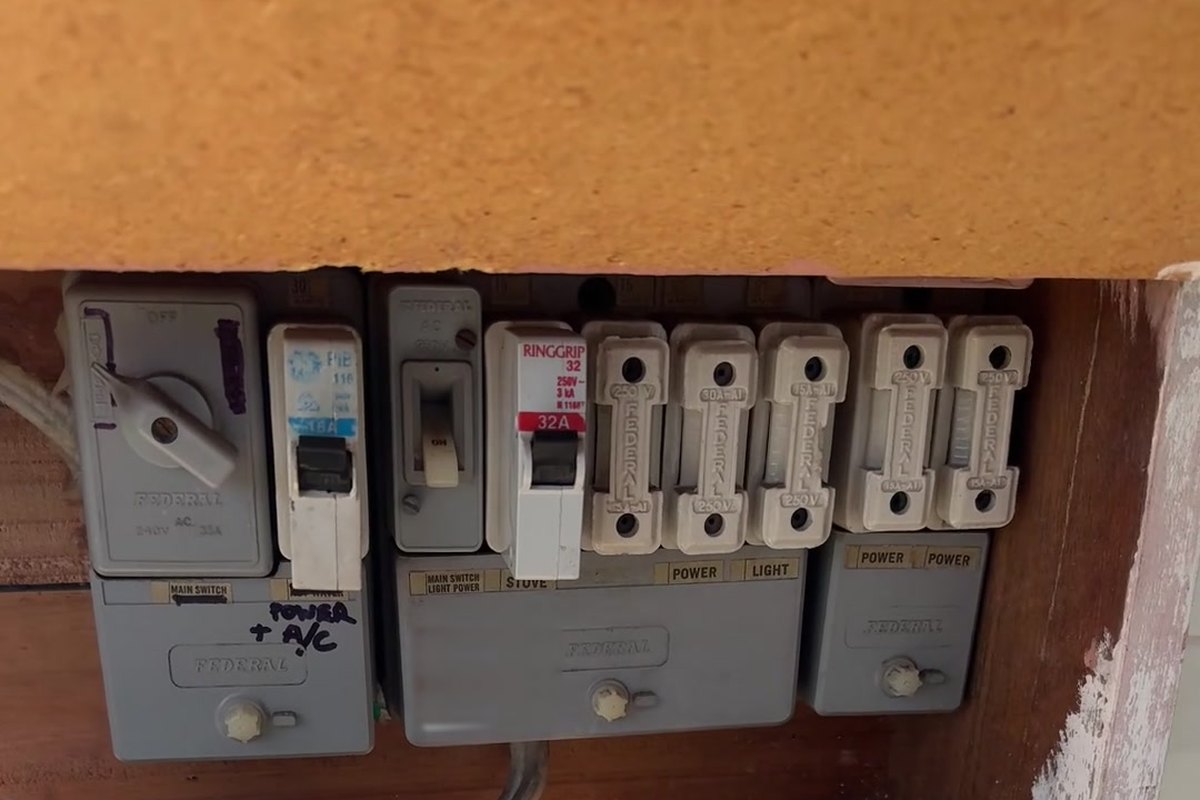
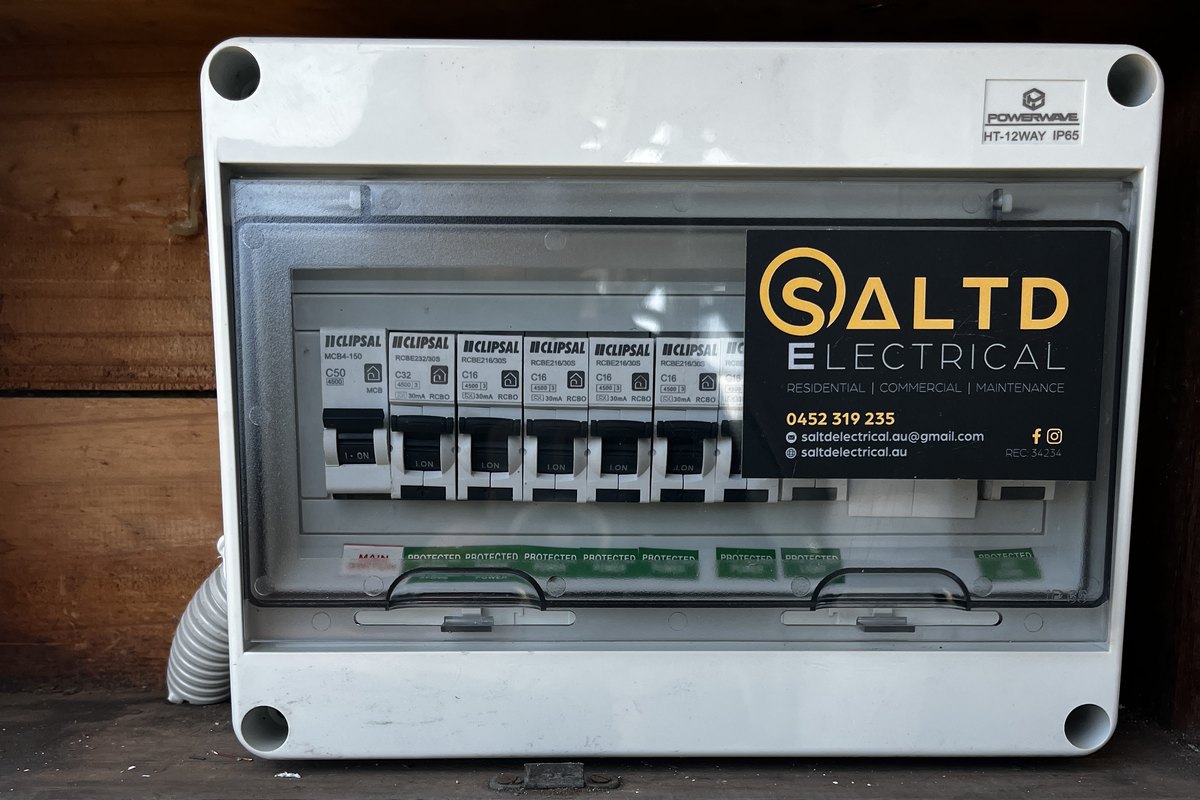
Signs yours is due
- Ceramic rewireable fuses, or fuse wire in a drawer somewhere
- No safety switch (RCD) on power and light circuits
- No spare ways left, so nothing new can be added
- Discolouration, heat marks or a smell around the board
- Circuits that trip under normal load
- You're adding an EV charger, aircon, a battery or a reno
What you get
- An RCBO per circuit — one fault takes out one circuit, not half the house
- Compliant main switch and correctly rated protection throughout
- Everything labelled — so the next person can read it
- Spare capacity deliberately left for what you add next
- Tested and certified, with prescribed work independently inspected
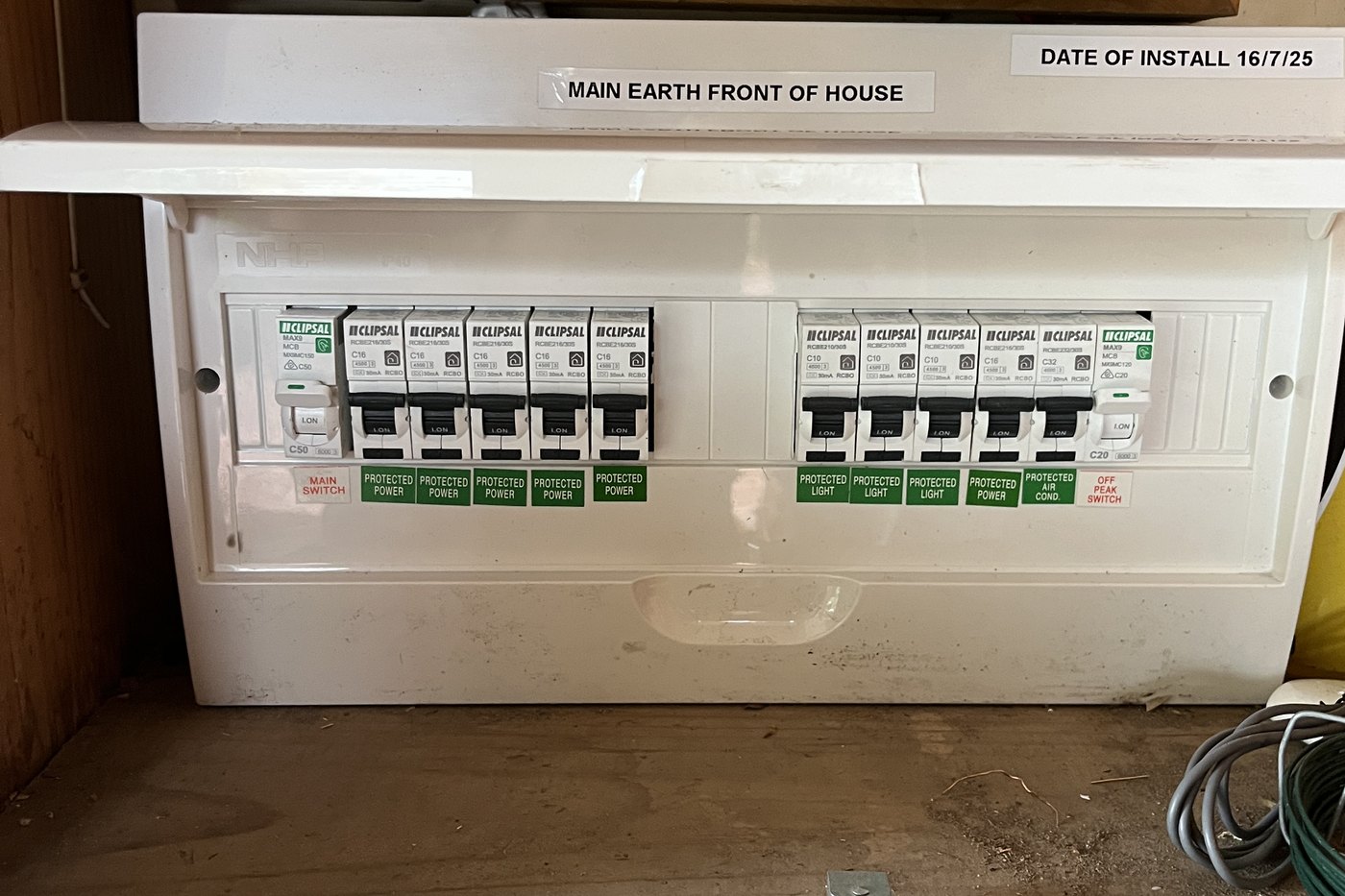
Planning an EV charger or a battery retrofit as well? Do the board once and do it for all three — it's meaningfully cheaper than three separate visits.
Consumer mains & three-phase upgrades
The consumer mains are the cables running from the street connection to your switchboard. Every circuit in the house sits downstream of them — and in plenty of homes around here they were sized for a household that cooked on gas and owned one television.
Signs yours are undersized
- Lights dip or flicker when the aircon, oven or kettle kicks in
- Overhead mains that are brittle, sagging or bare twisted conductor
- A meter box and point of attachment nobody has touched in decades
- Solar that trips out or throttles back on bright days — often voltage rise on a long, thin supply
- You've been told the board can't take an EV charger — frequently it's the mains, not the board
- You're adding a charger, a battery, ducted aircon or an induction cooktop
What the job involves
- Maximum demand calculated to AS/NZS 3000, not guessed off the last job
- Mains sized for what's next — charger, battery and aircon included, not just today's load
- Point of attachment, meter box or pillar reworked where the supply comes in
- Distributor application lodged for you — AusNet or United Energy, whichever covers your street
- We're on site when their crew attend, so the changeover happens in one visit rather than three
- Tested and certified, with prescribed work independently inspected
Going from single phase to three phase
Most homes are fed by a single phase. Three phase brings three in, so the property can carry roughly three times the load and heavy items can be spread across the phases instead of stacked on one. It's the upgrade behind 11 kW and 22 kW EV charging, larger battery and inverter systems, ducted air conditioning, workshop and shed machinery, and all-electric conversions where the cooktop, the hot water and the heating all land at once.
It's a bigger job than a switchboard swap. It needs new mains, a new point of attachment or pit connection, a three-phase main switch and board rework, an application to the distributor, and a three-phase meter fitted by your retailer's metering provider. We handle the electrical work and the paperwork, and coordinate the two visits that aren't ours so they don't turn into three.
Before you spend the money: most EVs sold in Australia cap their onboard charger near 7.4 kW. Three phase won't make those cars charge faster. We'll tell you when it won't help.
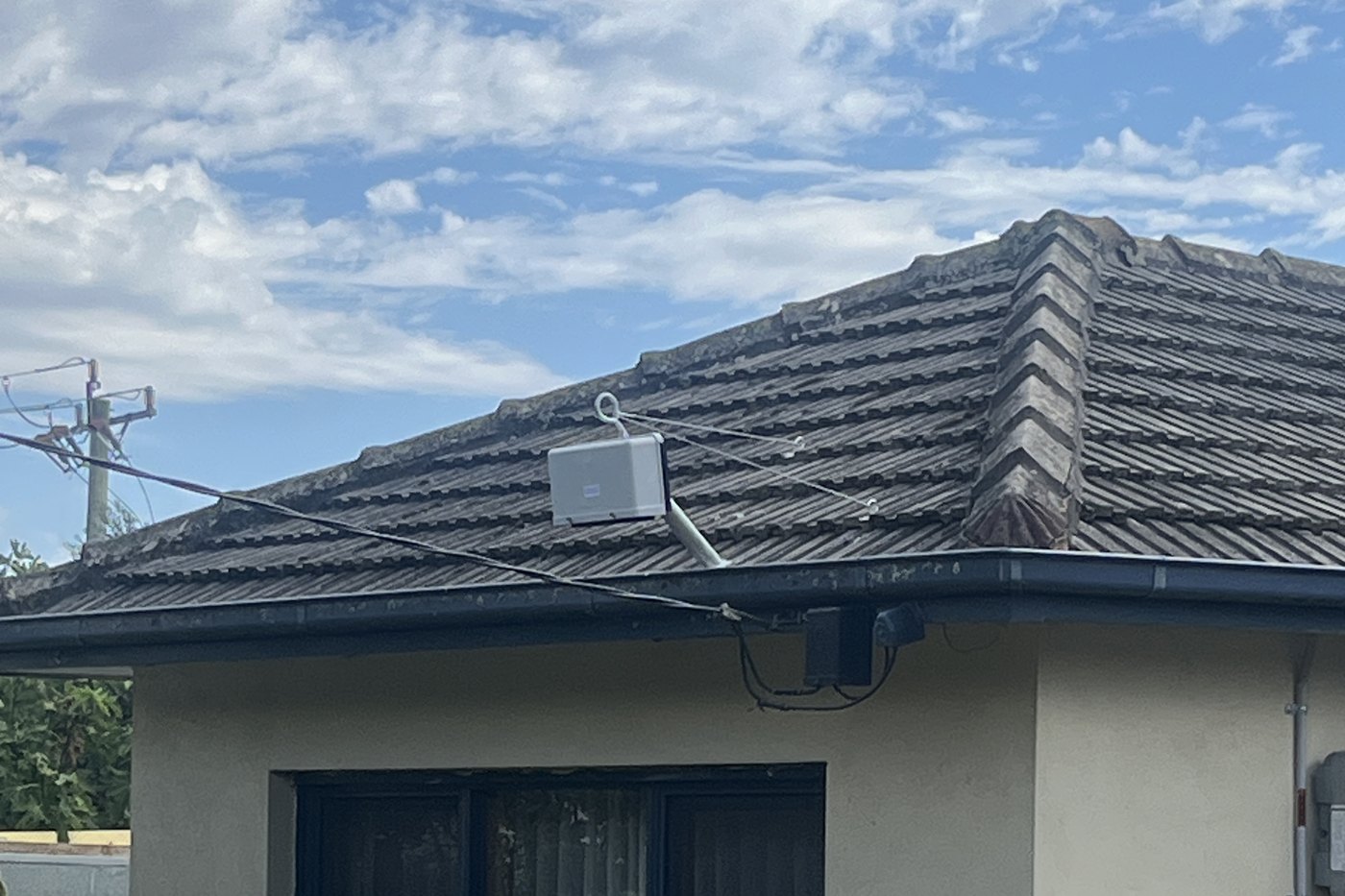
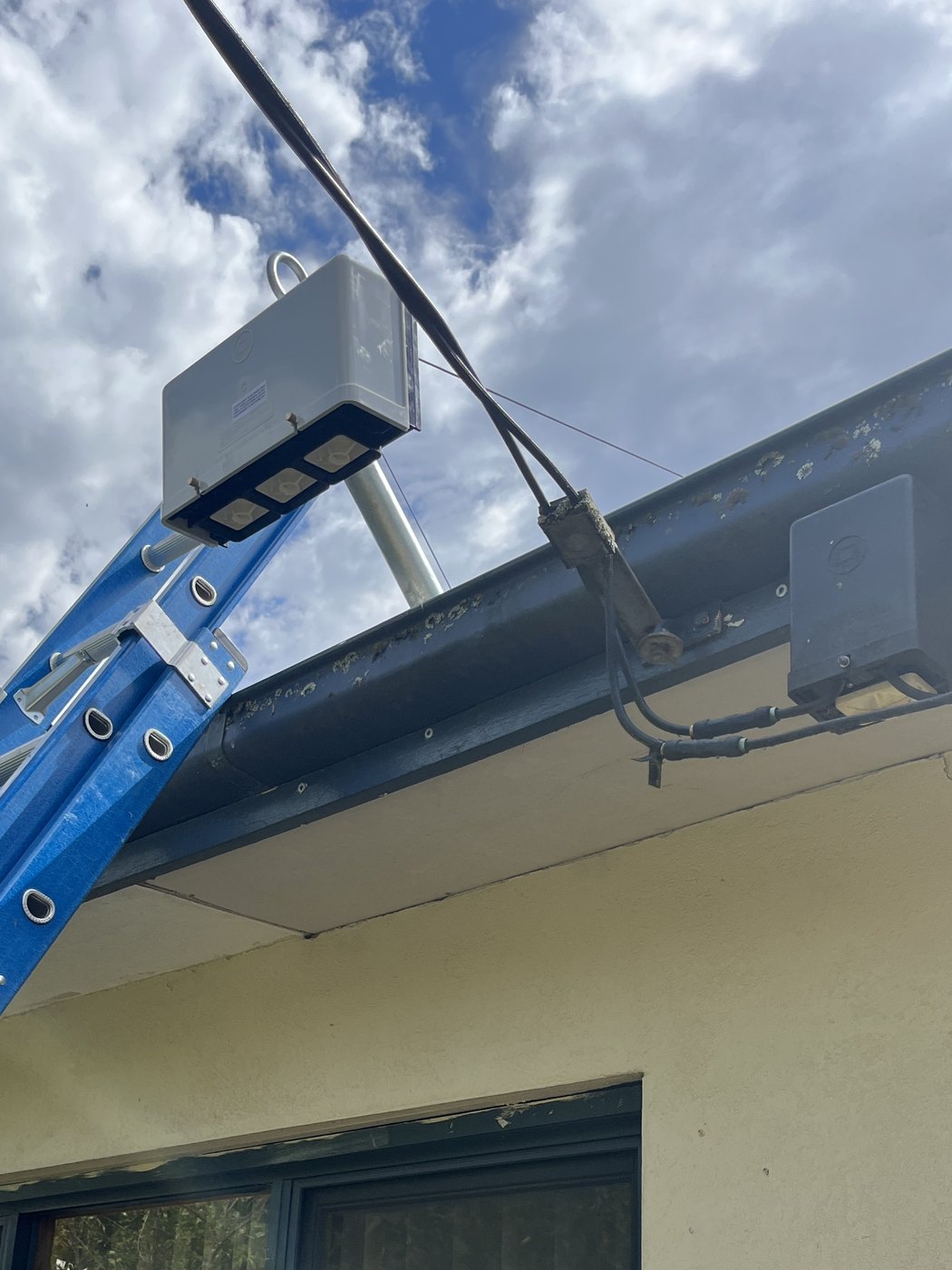
Most people meet this problem the wrong way round — they book an EV charger or a battery retrofit and find out on the day that the supply won't carry it. We check the mains and the switchboard before quoting, so the number you're given covers the whole job.
Three steps, no surprises
Call or send the form
Tell us your suburb and what's happening. Urgent faults get a call back first.
Diagnose, then price
We find the actual cause, then give you a fixed number to fix it. You decide.
Done and certified
Work completed, site cleaned up, Certificate of Electrical Safety in your hand.
Questions we get asked
Why does my safety switch keep tripping?
Because it's detecting current leaking to earth — which is exactly what it's designed to do. Usually it's one faulty appliance, a water-affected outdoor outlet, or cable insulation that's degraded. Resetting it repeatedly without finding the cause is the one thing you shouldn't do.
When should I replace my switchboard?
Ceramic fuses, no safety switch on both power and light circuits, no spare ways, or any sign of heat damage — any one of those is enough. Adding an EV charger, air conditioning or a battery usually forces the question anyway.
How do I know if my consumer mains need upgrading?
The usual tell is lights dipping when something big starts, or being told your supply won't carry an EV charger or a battery. It's decided properly by a maximum demand calculation, not by looking at the cable. If they do need replacing we handle the distributor application — AusNet or United Energy, whichever covers your street — and are on site when their crew attend.
Can you upgrade my house from single phase to three phase?
Yes — new mains, a new point of attachment, a three-phase main switch and board rework, the distributor application, and a three-phase meter fitted by your retailer's metering provider. We do the electrical work and the paperwork and coordinate the visits that aren't ours. Bear in mind most EVs sold here cap their onboard charger near 7.4 kW, so three phase won't make those cars charge faster. More on three-phase upgrades.
Do you do small jobs?
Yes, and we mean it. A dead power point, a fan that's stopped, a smoke alarm chirping at 2am. Plenty of electricians won't get off the ute for that. It's a deliberate part of what we do. If it's an addition rather than a repair — extra outlets, downlights or a ceiling fan — that's us too.
Can you work on rentals and managed properties?
Regularly. Compliance work and repairs, with documentation that suits both the agent and the owner, and tenant coordination included. Every Victorian rental agreement needs a two-yearly electrical safety check, whenever the tenancy started — including the ones that have been let for years and never had one.
How fast can you get here?
Pakenham, Officer, Beaconsfield, Berwick, Narre Warren and Cardinia — usually same or next day. Further out, usually within the week. Real faults jump the queue.
Do you supply a Certificate of Electrical Safety?
Always. Prescribed work is independently inspected as well. Keep the certificate — your insurer will want it if you ever claim.
Where we work
Pakenham and Surrounds.
Core — same or next day
- Pakenham
- Officer
- Beaconsfield
- Berwick
- Narre Warren
- Cardinia
Regular — usually within the week
- Cranbourne
- Clyde & Clyde North
- Drouin
- Warragul
- Emerald & Cockatoo
- Hallam
By arrangement
- Dandenong
- Frankston
- Phillip Island
Get it sorted
Tell us your suburb and what's going on. Urgent faults get a call back first.